

Insights · Search & SEO
Google Just Rewrote the Rules of Search
Here's What It Means for Your Business.
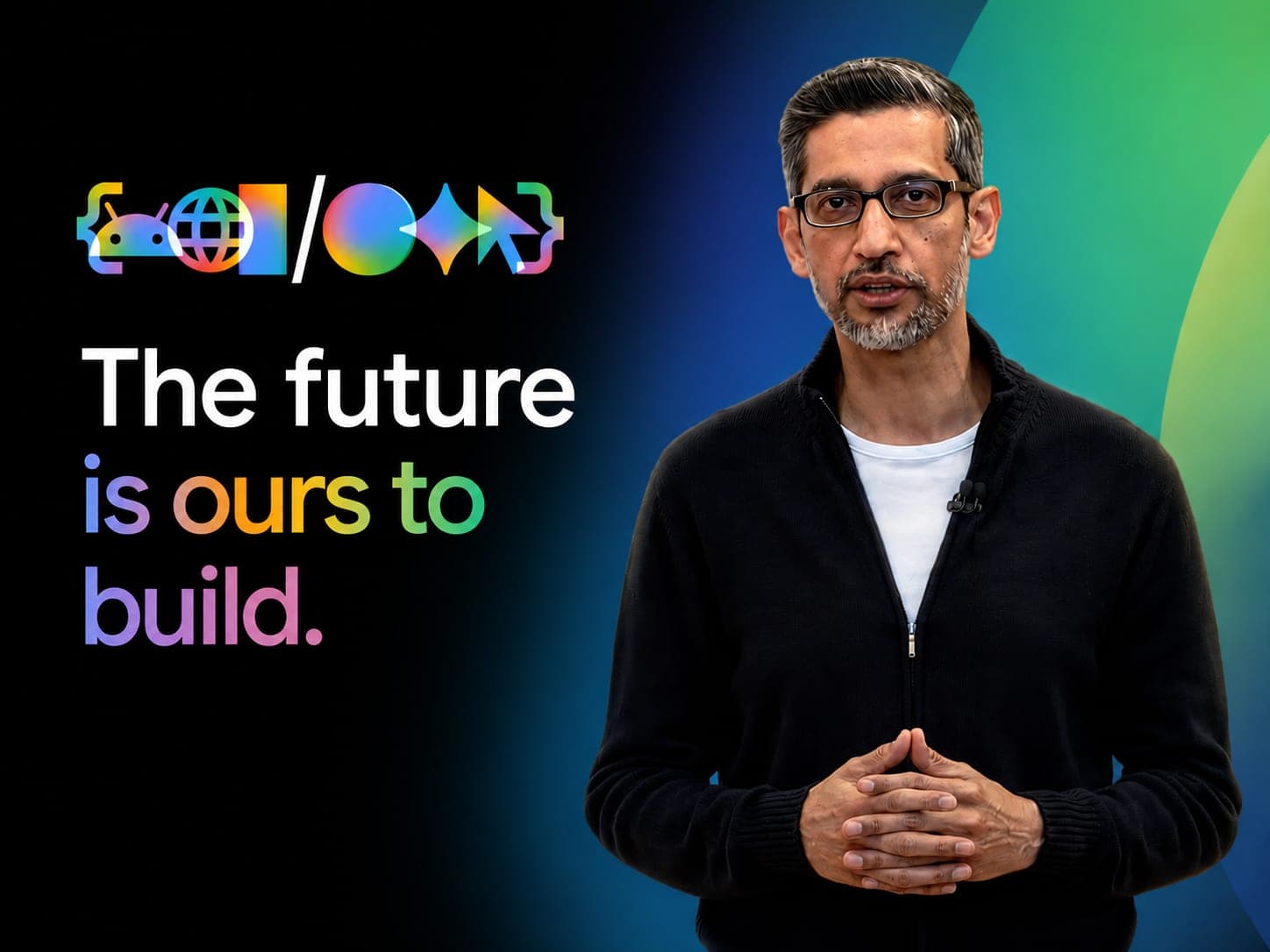
Last week at Google I/O 2026, Google announced the biggest change to its search engine in over 25 years. If you own a website, run a small business, or rely on Google to bring you customers, this affects you. The next 12 months are going to look very different from the last 12.
This is a breakdown of what's changed, what it means for search and SEO, and what you should be thinking about right now.
Section 1
Google's Announcement
For nearly three decades, Google Search worked the same way: you typed a few keywords, you got a list of blue links, and you clicked through to a website. That model is being retired.
Powered by their new Gemini 3.5 Flash model, Google Search is becoming an AI-first experience. The headline changes:
- The blue links are moving to the back seat. When you search, you now get a direct, AI-generated answer at the top of the page. For most people, that's the only thing they'll read.
- Search is now a conversation. The search bar expands to accept full sentences, follow-up questions, images, videos, PDFs, and even open browser tabs as input. It behaves more like ChatGPT than the Google we grew up with.
- Search builds custom mini-apps on the fly. Ask about a workout plan or an apartment hunt, and Google can generate a custom interactive dashboard or tracker for you, right inside the results page. No website required.
- Search agents work for you 24/7. "Information agents" run in the background, monitoring topics like price drops, sneaker releases, or apartment listings, and ping you when something changes.
- Gemini Spark. A personal AI agent that connects to your Gmail, Calendar, Docs, and Drive, and completes multi-step tasks for you, even when your laptop is closed.
- Universal Cart. Lets the AI buy products on your behalf across Google Search, YouTube, Gmail, and Gemini, in one combined checkout.
“Google Search as you know it is over.”
Google's own VP of Search, Liz Reid, called it “the biggest upgrade to our Search box in over 25 years.”
Section 2
What This Means for the Future of Search and SEO
The Pros
- Better answers for users. People can finally ask questions the way they actually think in full sentences, with context, with images, instead of translating their needs into clunky keywords.
- Less friction for genuinely complex tasks. Comparing products, planning a trip, monitoring listings, or researching a technical question becomes much faster.
- Personalization that's actually useful. If you opt in, Google can pull from your own Gmail, Calendar, and Photos to give answers tailored to your life, not just the average internet user's.
- A higher bar for content quality. Thin, click-bait, SEO-stuffed pages are about to lose their value entirely. Genuine expertise, original reporting, and real depth become more important, not less.
The Cons
- The "social contract" of the web is breaking. For 25 years, the deal was simple: Google scrapes your site, and in exchange Google sends you traffic. That trade is being torn up. Google is now scraping your content, summarizing it, and presenting the answer directly inside its own interface, keeping the user and the ad revenue on Google's page. You did the work; Google keeps the visitor. For many website owners this feels less like a partnership and more like having their content quietly absorbed into someone else's product.
- Websites risk becoming invisible "training data". This is the fear keeping a lot of publishers and business owners up at night: if Google’s AI can read your site, distill your expertise, and answer the user’s question without ever showing your link, what is the website actually for? Your content fuels the answer; you get no credit, no click, and no customer. Lily Ray, a respected SEO strategist, called the impact on the open web "devastating".
- Zero-click search is becoming the norm. Industry data from the last year already shows publishers and small businesses reporting significant drops in organic search traffic, and this update is accelerating that trend.
- The advertising model is changing, and "pay-to-win" is a real concern. Ads are no longer banners next to links; they're being generated inside the AI's answer itself. Advertisers hand creative and targeting control over to Google's systems, and bid for placement inside the sentences the AI produces. If companies can pay to be mentioned, recommended, or favourably described inside an "objective" AI answer, how does the average user tell a genuine recommendation from a paid one? Many fear we're heading toward a pay-to-win search landscape where visibility belongs to whoever has the biggest ad budget, not whoever has the best answer.
- SEO as we knew it is being rewritten. Ranking for keywords matters less. What matters now is whether Google's AI considers your content authoritative enough to cite, summarize, or pull facts from. This is sometimes called GEO (Generative Engine Optimization) or AI Search Optimization, and the playbook is still being written.
Search is becoming much more useful for users, and much more difficult for anyone who depends on being found through it.
Section 3
What This Means for Your Business
If you're a small or medium business owner with a website, here's the part that matters most.
What's NOT changing
- You still need a strong website. When the AI cites a source, recommends a provider, or hands a user off to "book directly," it links to a real website. If yours doesn't exist, isn't fast, isn't credible, or doesn't clearly explain who you are and what you do, you're invisible.
- Trust still wins. People will continue to research big purchases, service providers, and local businesses before they commit. The AI just becomes the new first step in that research.
- Local intent still matters. "Find a plumber near me," "book a hair appointment Friday," "compare quotes from contractors in Victoria." All of these still resolve to actual businesses, often through Maps and direct booking flows.
What IS changing
- Less raw traffic, but higher-intent visitors. Casual researchers will get their answer from the AI and never click. The people who do reach your site will be further down the buying funnel and ready to act.
- Your content has to be quotable. The new game is being the source the AI pulls from. That means clear, factual, well-structured content with real expertise, not keyword-stuffed filler. Schema markup, clean HTML, fast load times, and authoritative writing all become non-negotiable.
- Branded and direct traffic become more valuable than ever. When organic search shrinks, the customers who type your name directly, find you through social, or come via referral are worth more. Investing in brand, email lists, and community matters more than chasing rankings.
- Booking, ordering, and lead capture need to be frictionless. Google's AI is increasingly going to send users straight to a booking action. If your site can't accept that handoff cleanly with modern UX, mobile-first design, and fast checkout, the lead disappears.
- Visual and interactive content gets a boost. Google can now read images, videos, and even open browser tabs as search inputs. Sites with strong original photography, video, and rich media will surface in ways text-only sites won't.
The bottom line for SMEs
A great website is no longer a brochure that ranks on Google. It is the credibility layer that the AI checks before recommending you, and the conversion engine that converts the high-intent visitor when they finally arrive.
Businesses that treat their website as a one-time expense and ignore it for five years are about to discover they're invisible. Businesses that invest in a fast, credible, well-structured, content-rich site, paired with brand and direct channels, will come out of this transition ahead of competitors who didn't see it coming.
The average website used to be a digital brochure that people stumbled across on Google. Now it's the first thing AI tools look at when deciding whether to recommend your business. And when someone does click through to you, your site needs to convince them quickly, because by that point they've already done their research and they're ready to decide.
Businesses that treat their website as a one-time job are going to find themselves getting passed over. The ones that keep their site fast, maintained, trustworthy, and genuinely useful will be the ones that come out ahead.
Mike Mara is the CEO and Chief Operations Officer of Motiv Creative Labs Inc., a Victoria, BC creative development studio building high-performance, AI-ready websites and custom apps for small and medium-sized businesses across British Columbia.
Ready to talk?
Is your website ready for AI-first search?
We help BC businesses build fast, credible, code-built websites that earn citations from AI engines and convert the high-intent visitors who do arrive.